Skip to content

Employee cybersecurity education

Train the people who open the email.

Cybertection Training Center teaches a company how to spot phishing, payment fraud, ransomware, and the other attacks that depend on a human — then goes deeper for the teams whose job is security.

A program of Cybertection LLC. Hands-on, remote, live. Not a slide deck with a quiz at the end.

Cybertection
Cybertection Training Center. Employee cybersecurity education.

A sample of the work

Three messages. One company.

You are staff at a fictional company, Harborline. Decide whether each note is a phish. The tells are the ones we drill with real employees: domain, pressure, and money.

These are training examples. They are not messages from a real sender.

Training mail 1 of 3 · you work at Harborline

Score 0

Inbox

Action required: direct deposit update before Friday

Payroll Desk <[email protected]>

Hello employee,

We could not verify the bank account on file. Confirm your deposit details today or Friday's pay will be held.

This request expires in 3 hours.

Update deposit details

https://northline-pay.com/verify
Everything on the roster

Workforce topics are the employee program. The fourteen training areas are what Cybertection already teaches people who work in security, or who are entering it.

Open the full writeups

Every employee

  1. 01Phishing email recognition
  2. 02Spear phishing and business email compromise
  3. 03Links, attachments, and QR codes
  4. 04Passwords and multi-factor authentication
  5. 05Phone, text, and in-person social engineering
  6. 06Ransomware awareness
  7. 07Sensitive data handling
  8. 08Remote and hybrid work
  9. 09Phones and untrusted networks
  10. 10Deepfakes, voice clones, and AI lures
  11. 11Invoice fraud and payment redirection
  12. 12Reporting an incident
  13. 13Physical security and lost devices
  14. 14Acceptable use and shadow IT

Security teams and career cohorts

  1. 01Cybersecurity
  2. 02Penetration testing
  3. 03SOC analyst
  4. 04GRC and compliance
  5. 05Cloud security
  6. 06DevSecOps
  7. 07AI and machine learning
  8. 08Security software development
  9. 09Incident response
  10. 10Threat hunting
  11. 11Malware analysis
  12. 12Digital forensics
  13. 13Network security
  14. 14Vulnerability management
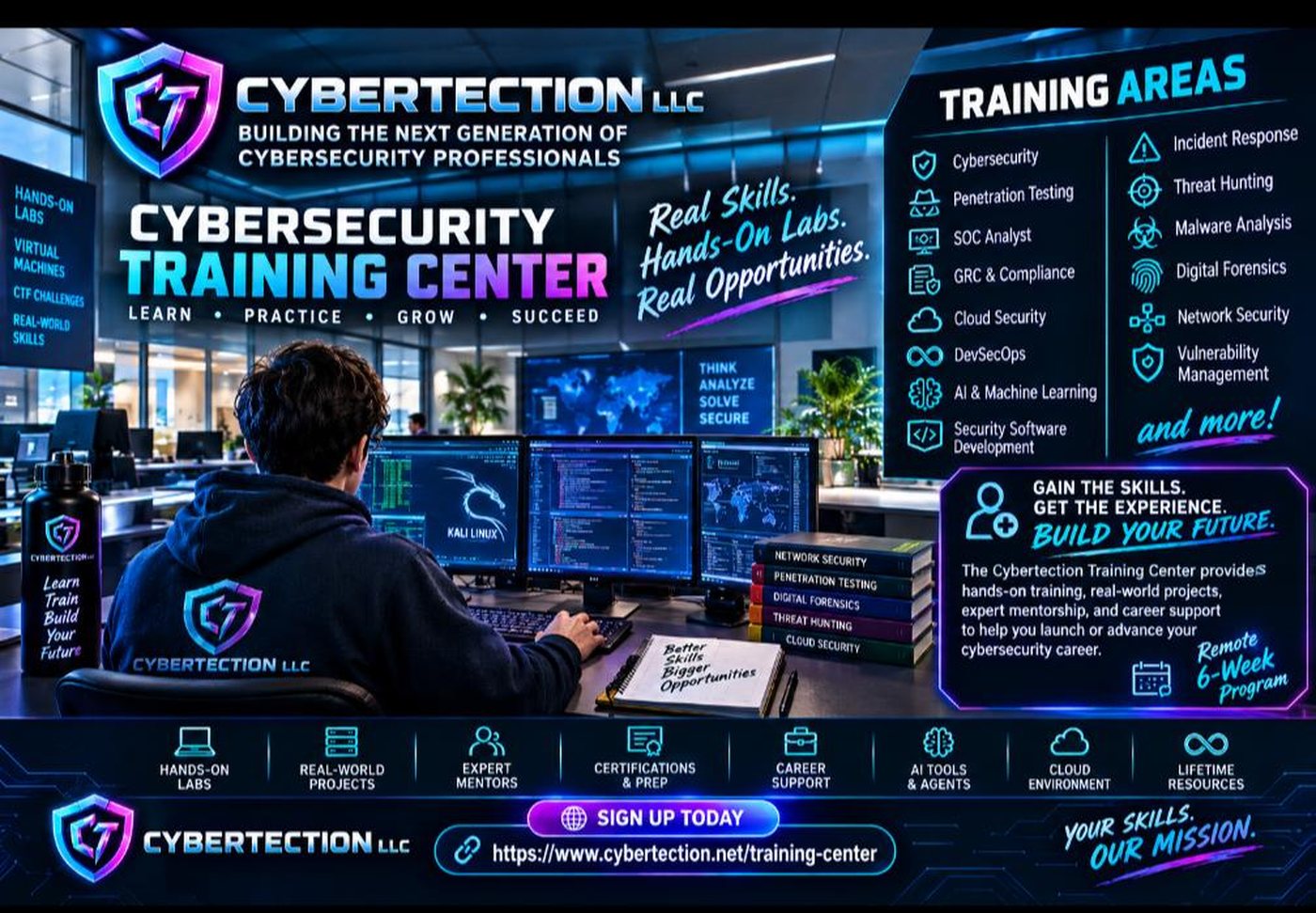
A learner at a multi-monitor security lab, Cybertection Training Center branding on the hoodie and bottle.

How a session actually runs

  • Hands-on labs

    People work the problem — a message, a ticket, a finding — instead of watching slides about it.

  • Live, remote instruction

    Cohorts meet with an instructor. The Training Center already runs this as a remote program.

  • Real project work

    Specialist tracks include projects, not only quizzes. Awareness tracks include drills your staff can repeat.

  • Mentors

    Practitioners review the work with the group, the same model used across the Training Center.

  • A cloud lab

    Practice stays in a lab environment so nobody is experimenting on production mail or production systems.

  • AI tools in the work

    Cohorts use the class of assistants showing up in real security jobs, with rules for company data.

  • Certification prep

    On specialist tracks where an exam is the point, prep is part of the cohort. Confirm the exam before you announce it internally.

  • A 6-week deep cohort

    People going into the field, or staff going deep on a track, can use the Training Center's 6-week remote format.

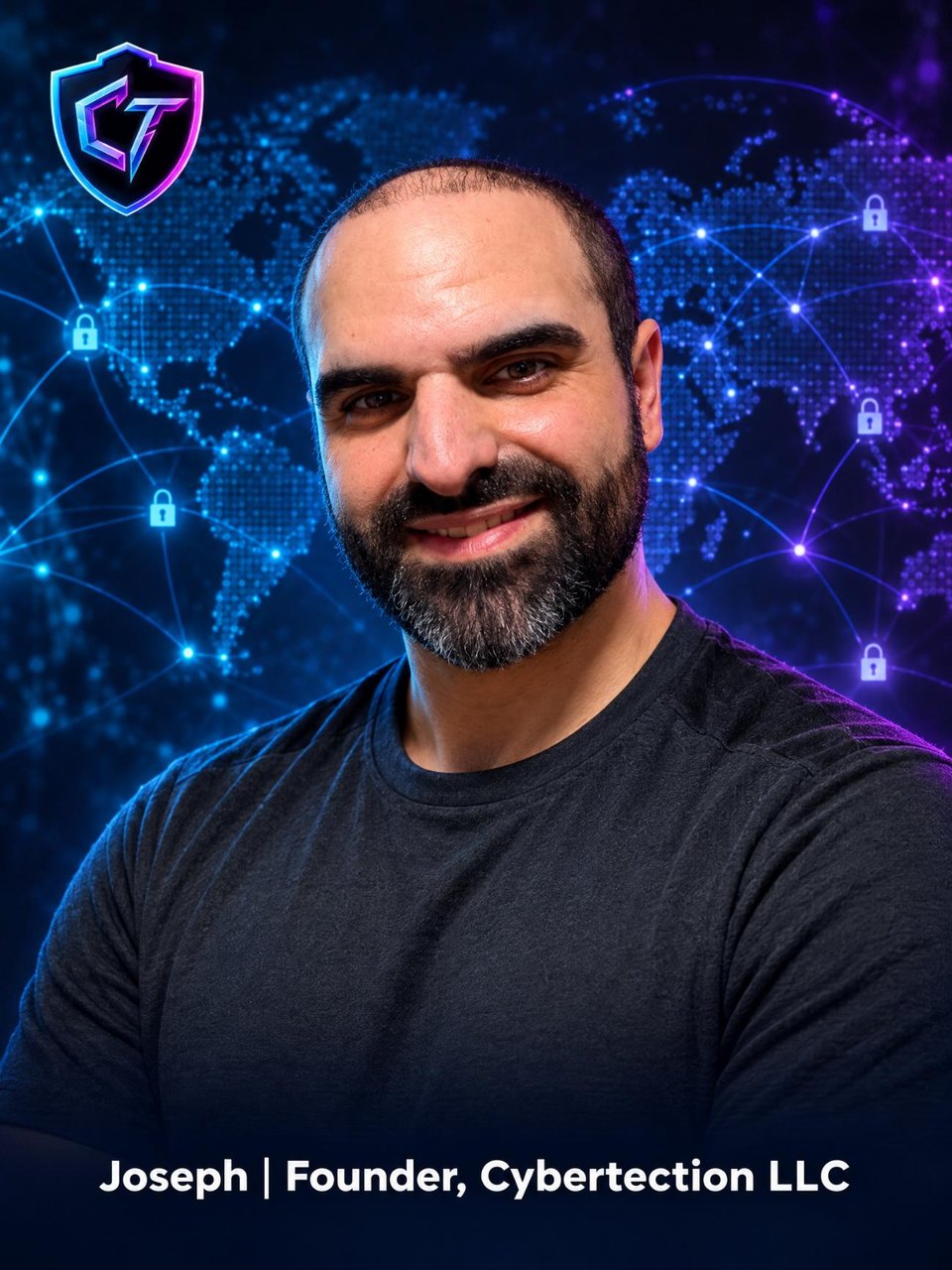
Joseph, founder of Cybertection LLC

Joseph · Founder, Cybertection LLC

The company behind the cohort

Joseph founded Cybertection LLC. The company builds security software, including the GuardBot tools, and runs the Training Center for people learning the work.

Employee education is the offer for a business that needs the whole staff — not only a future analyst — to handle a phishing email, a fake wire, or a voice that sounds like the boss.